+------------------------------------------------------------------+ | | | TRANSCRIBER'S NOTES: | | | | The original language has been maintained, including inconsisten-| | cies in spelling and hyphenation, except as mentioned below. | | | | Changes made to the original text: 'chemise type' changed to | | 'chemise-type' as elsewhere; page 17: closing square bracket | | deleted after 'what an array'; page 65: quote mark inserted | | before footnote anchor [65]. | | | | Footnotes have been moved to directly underneath the paragraph | | or section they refer to. | | | | Texts printed in italics in the original publication have been | | transcribed between underscores, as in text; bold-face text is | | represented here between equal signs, as in =text=. Small | | capitals in the original are transcribed as ALL CAPITALS. | | | +------------------------------------------------------------------+
UNITED STATES NATIONAL MUSEUM BULLETIN 250
CONTRIBUTIONS FROM
THE MUSEUM OF HISTORY AND TECHNOLOGY
PAPER 64
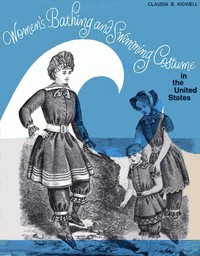
WOMEN'S BATHING AND SWIMMING COSTUME IN THE UNITED STATES
Claudia B. Kidwell
INTRODUCTION 3 CULTURAL ENVIRONMENT 6 BATHING COSTUME 14 SWIMMING COSTUME 24 CONCLUSIONS 32
SMITHSONIAN INSTITUTION PRESS
CITY OF WASHINGTON
1968
For sale by the Superintendent of Documents, U.S. Government Printing Office Washington, D.C. 20402--Price 50 cents (paper cover)
Claudia B. Kidwell
Women's Bathing and Swimming Costume in the United States
The evolution of the modern swim suit from an unflattering, restrictive bathing dress into an attractive, functional costume is traced from colonial times to the present. This evolution in style reflects not only the increasing involvement of women in aquatic activities but also the changing motivations for feminine participation. The nature of the style changes in aquatic dress were influenced by the fashions of the period, while functional improvements were limited by prevailing standards of modesty. This mutation of the bathing dress to the swim suit demonstrates the changing attitudes and status of women in the United States, from the traditional image of the subordinate "weaker sex" to an equal and active member of the society.
THE AUTHOR: Claudia B. Kidwell is assistant curator of American costume, department of civil history, in the Smithsonian Institution's Museum of History and Technology.