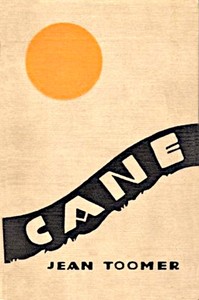
CANE
Jean Toomer
_With a Foreword by_ Waldo Frank
_Oracular. Redolent of fermenting syrup, Purple of the dusk, Deep-rooted cane._
LIVERIGHT NEW YORK
COPYRIGHT © 1923 BY BONI & LIVERIGHT ® 1951 BY JEAN TOOMER
1.987654
STANDARD BOOK NUMBER: 87140-535-0 LIBRARY OF CONGRESS CATALOG CARD NUMBER: 23-12749
MANUFACTURED IN THE UNITED STATES OF AMERICA
To my grandmother...
FOREWORD
Reading this book, I had the vision of a land, heretofore sunk in the mists of muteness, suddenly rising up into the eminence of song. Innumerable books have been written about the South; some good books have been written in the South. This book is the South. I do not mean that Cane covers the South or is the South’s full voice. Merely this: a poet has arisen among our American youth who has known how to turn the essences and materials of his Southland into the essences and materials of literature. A poet has arisen in that land who writes, not as a Southerner, not as a rebel against Southerners, not as a Negro, not as apologist or priest or critic: who writes as a poet. The fashioning of beauty is ever foremost in his inspiration: not forcedly but simply, and because these ultimate aspects of his world are to him more real than all its specific problems. He has made songs and lovely stories of his land ... not of its yesterday, but of its immediate life. And that has been enough.
How rare this is will be clear to those who have followed with concern the struggle of the South toward literary expression, and the particular trial of that portion of its folk whose skin is dark. The gifted Negro has been too often thwarted from becoming a poet because his world was forever forcing him to recollect that he was a Negro. The artist must lose such lesser identities in the great well of life. The English poet is not forever protesting and recalling that he is English. It is so natural and easy for him to be English that he can sing as a man. The French novelist is not forever noting: “This is French.” It is so atmospheric for him to be French, that he can devote himself to saying: “This is human.” This is an imperative condition for the creating of deep art. The whole will and mind of the creator must go below the surfaces of race. And this has been an almost impossible condition for the American Negro to achieve, forced every moment of his life into a specific and superficial plane of consciousness.
The first negative significance of Cane is that this so natural and restrictive state of mind is completely lacking. For Toomer, the Southland is not a problem to be solved; it is a field of loveliness to be sung: the Georgia Negro is not a downtrodden soul to be uplifted; he is material for gorgeous painting: the segregated self-conscious brown belt of Washington is not a topic to be discussed and exposed; it is a subject of beauty and of drama, worthy of creation in literary form.
It seems to me, therefore, that this is a first book in more ways than one. It is a harbinger of the South’s literary maturity: of its emergence from the obsession put upon its minds by the unending racial crisis—an obsession from which writers have made their indirect escape through sentimentalism, exoticism, polemic, “problem” fiction, and moral melodrama. It marks the dawn of direct and unafraid creation. And, as the initial work of a man of twenty-seven, it is the harbinger of a literary force of whose incalculable future I believe no reader of this book will be in doubt.
How typical is Cane of the South’s still virgin soil and of its pressing seeds! and the book’s chaos of verse, tale, drama, its rhythmic rolling shift from lyrism to narrative, from mystery to intimate pathos! But read the book through and you will see a complex and significant form take substance from its chaos. Part One is the primitive and evanescent black world of Georgia. Part Two is the threshing and suffering brown world of Washington, lifted by opportunity and contact into the anguish of self-conscious struggle. Part Three is Georgia again ... the invasion into this black womb of the ferment seed: the neurotic, educated, spiritually stirring Negro. As a broad form this is superb, and the very looseness and unexpected waves of the book’s parts make Cane still more South, still more of an æsthetic equivalent of the land.
What a land it is! What an Æschylean beauty to its fateful problem! Those of you who love our South will find here some of your love. Those of you who know it not will perhaps begin to understand what a warm splendor is at last at dawn.
A feast of moon and men and barking hounds, An orgy for some genius of the South With bloodshot eyes and cane-lipped scented mouth Surprised in making folk-songs....
So, in his still sometimes clumsy stride (for Toomer is finally a poet in prose) the author gives you an inkling of his revelation. An individual force, wise enough to drink humbly at this great spring of his land ... such is the first impression of Jean Toomer. But beyond this wisdom and this power (which shows itself perhaps most splendidly in his complete freedom from the sense of persecution), there rises a figure more significant: the artist, hard, self-immolating, the artist who is not interested in races, whose domain is Life. The book’s final Part is no longer “promise”; it is achievement. It is no mere dawn: it is a bit of the full morning. These materials ... the ancient black man, mute, inaccessible, and yet so mystically close to the new tumultuous members of his race, the simple slave Past, the shredding Negro Present, the iridescent passionate dream of the To-morrow ... are made and measured by a craftsman into an unforgettable music. The notes of his counterpoint are particular, the themes are of intimate connection with us Americans. But the result is that abstract and absolute thing called Art.
WALDO FRANK.
Certain of these pieces have appeared in Broom, Crisis, Double Dealer, Liberator, Little Review, Modern Review, Nomad, Prairie, and S 4 N.
To these magazines: thanks.
CONTENTS
PAGE
FOREWORD, by Waldo Frank vii
KARINTHA 1
REAPERS 6
NOVEMBER COTTON FLOWER 7
BECKY 8
FACE 14
COTTON SONG 15
CARMA 16
SONG OF THE SON 21
GEORGIA DUSK 22
FERN 24
NULLO 34
EVENING SONG 35
ESTHER 36
CONVERSION 49
PORTRAIT IN GEORGIA 50
BLOOD-BURNING MOON 51
SEVENTH STREET 71
RHOBERT 73
AVEY 76
BEEHIVE 89
STORM ENDING 90
THEATER 91
HER LIPS ARE COPPER WIRE 101
CALLING JESUS 102
BOX SEAT 104
PRAYER 131
HARVEST SONG 132
BONA AND PAUL 134
KABNIS 157
KARINTHA
Her skin is like dusk on the eastern horizon, O cant you see it, O cant you see it, Her skin is like dusk on the eastern horizon ... When the sun goes down.
Men had always wanted her, this Karintha, even as a child, Karintha carrying beauty, perfect as dusk when the sun goes down. Old men rode her hobby-horse upon their knees. Young men danced with her at frolics when they should have been dancing with their grown-up girls. God grant us youth, secretly prayed the old men. The young fellows counted the time to pass before she would be old enough to mate with them. This interest of the male, who wishes to ripen a growing thing too soon, could mean no good to her.
Karintha, at twelve, was a wild flash that told the other folks just what it was to live. At sunset, when there was no wind, and the pine-smoke from over by the sawmill hugged the earth, and you couldnt see more than a few feet in front, her sudden darting past you was a bit of vivid color, like a black bird that flashes in light. With the other children one could hear, some distance off, their feet flopping in the two-inch dust. Karintha’s running was a whir. It had the sound of the red dust that sometimes makes a spiral in the road. At dusk, during the hush just after the sawmill had closed down, and before any of the women had started their supper-getting-ready songs, her voice, high-pitched, shrill, would put one’s ears to itching. But no one ever thought to make her stop because of it. She stoned the cows, and beat her dog, and fought the other children... Even the preacher, who caught her at mischief, told himself that she was as innocently lovely as a November cotton flower. Already, rumors were out about her. Homes in Georgia are most often built on the two-room plan. In one, you cook and eat, in the other you sleep, and there love goes on. Karintha had seen or heard, perhaps she had felt her parents loving. One could but imitate one’s parents, for to follow them was the way of God. She played “home” with a small boy who was not afraid to do her bidding. That started the whole thing. Old men could no longer ride her hobby-horse upon their knees. But young men counted faster.